

 English
 русский
 Español
Duvet Cover Factory Guide | Materials, Processes & Bulk Buying Tips
A buyer in the United States sourcing 5,000 duvet covers for an Amazon launch usually compares three numbers before anything else: fabric composition, gram weight, and printing process. Those three specifications decide the unit cost, the perceived quality, and whether the product survives ten wash cycles without fading. But the reliability of those specifications depends on the factory behind them. This guide explains what a duvet cover factory should be able to prove, what the technical parameters actually mean, and how to take a bulk order from first inquiry to final delivery.
What Is a Duvet Cover and Why It Matters for Your Business
A duvet cover is a removable protective shell that fits over a duvet insert (the quilted blanket filled with down, feather, or fiber). A comforter, by contrast, is a complete layered blanket sold as a single unit. The distinction changes how you source: a duvet cover is a fabric-driven product with no fill, so it is lighter to ship, easier to warehouse, and simpler to produce in high volumes than a filled comforter set.
In North America and Europe, duvet covers are routinely sold as independent SKUs, either paired with matching pillow shams or offered on their own so consumers can combine them with any insert. Serious home textile factories therefore keep duvet covers as a separate category rather than folding them into comforter production. The products may look similar on a retail shelf, but the cutting line, packaging, and quality parameters are distinct.
Key Materials Used in Duvet Cover Manufacturing
Polyester dominates large-scale bedding production for a practical reason: it is dimensionally stable, resistant to shrinking and wrinkling, and holds disperse dyes with strong colorfastness. Most duvet cover manufacturers base their volume programs on 99.99% polyester fabric because it performs consistently through the high-speed printing and finishing lines that keep unit costs competitive at scale.
Cotton offers natural breathability and a premium hand feel, but it costs more, wrinkles more easily, and requires stricter wash-care labeling. Poly-cotton blends sit between the two. A factory that can run both polyester and cotton programs (this supplier, for instance, produces cotton solid bed sheets alongside its 99.99% polyester bedding range) gives you more price points without forcing a vendor change.
Fabric structure matters as much as fiber content. Twill weaves deliver a tighter, more durable surface with a subtle diagonal texture, while satin weaves produce a smooth, lustrous hand feel that presents well in premium packaging. Always ask the supplier to state both fiber composition and weave structure on the quotation. To understand why polyester performs so well in this category, read more about the advantages of polyester in home textiles.
| Material | Key Strengths | Typical Programs | Trade-offs |
|---|---|---|---|
| 99.99% polyester | Durable, wrinkle-resistant, colorfast | Value retail, e-commerce, hospitality | Lower natural breathability |
| Pure cotton | Breathable, soft, natural premium feel | Mid-to-high-end retail | Higher cost, wrinkles, careful laundering |
| Poly-cotton blend | Balanced cost and comfort | Mass-market programs | Compromises in both directions |
Understanding Fabric Weight (GSM) and Its Role in Quality
Gram weight (gsm) is the mass of fabric per square meter, and it directly drives hand feel, opacity, durability, cost, and shipping weight. A transparent duvet cover factory states the gsm of every product, which lets buyers compare quotations on an equal technical basis.
| Weight | Typical Profile | Common Market Fit |
|---|---|---|
| 75gsm | Light, crisp, economical | Budget retail, summer collections |
| 85gsm | Balanced hand feel and durability | Mid-market all-season lines |
| 90g to 100g | Fuller body, heavier touch | Value-oriented premium programs |
| 115gsm | Substantial, premium feel | High-end retail and hospitality |
Look for a supplier that offers several weights within the same fabric family. This factory lists 75gsm, 85gsm, 90g, 100g, and 115gsm options across its polyester bedding programs, so a single supplier can serve entry-level and premium buyers alike without a change of partner.
Printing and Weaving Methods Every Buyer Should Know
Printing technology determines how a pattern looks, feels, and lasts. For polyester duvet covers, four processes dominate global sourcing:
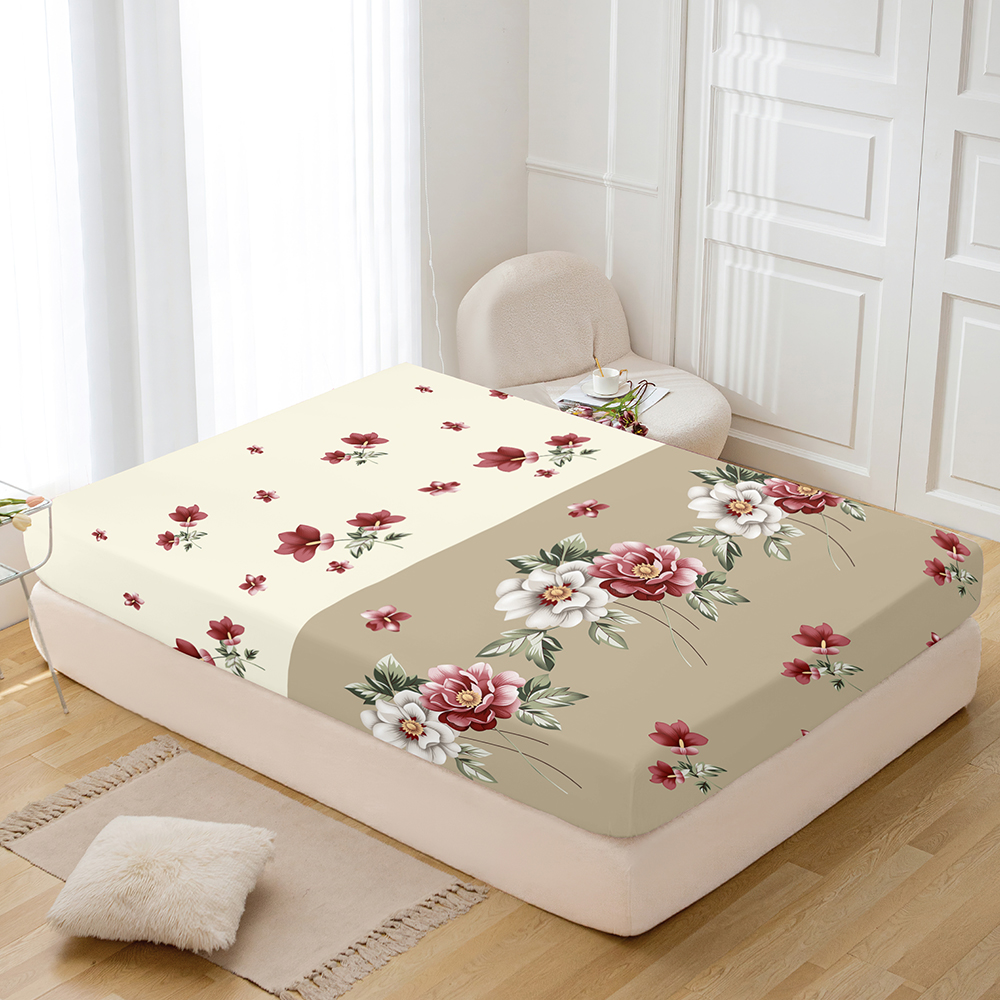
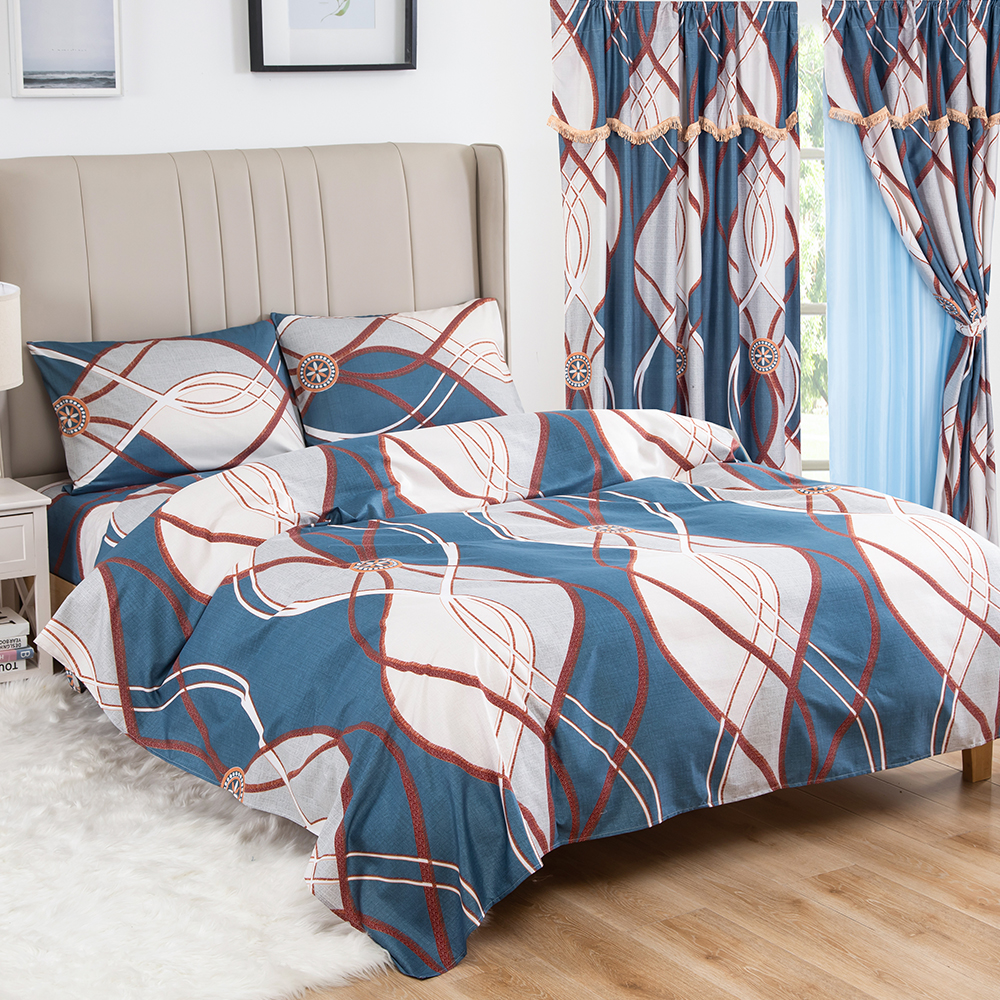
- Disperse printing bonds dye into the polyester fibers at high temperature, producing vivid colors with strong wash fastness and a soft hand feel. It is the default for pattern-heavy retail programs; a representative example is this disperse printed polyester bedding
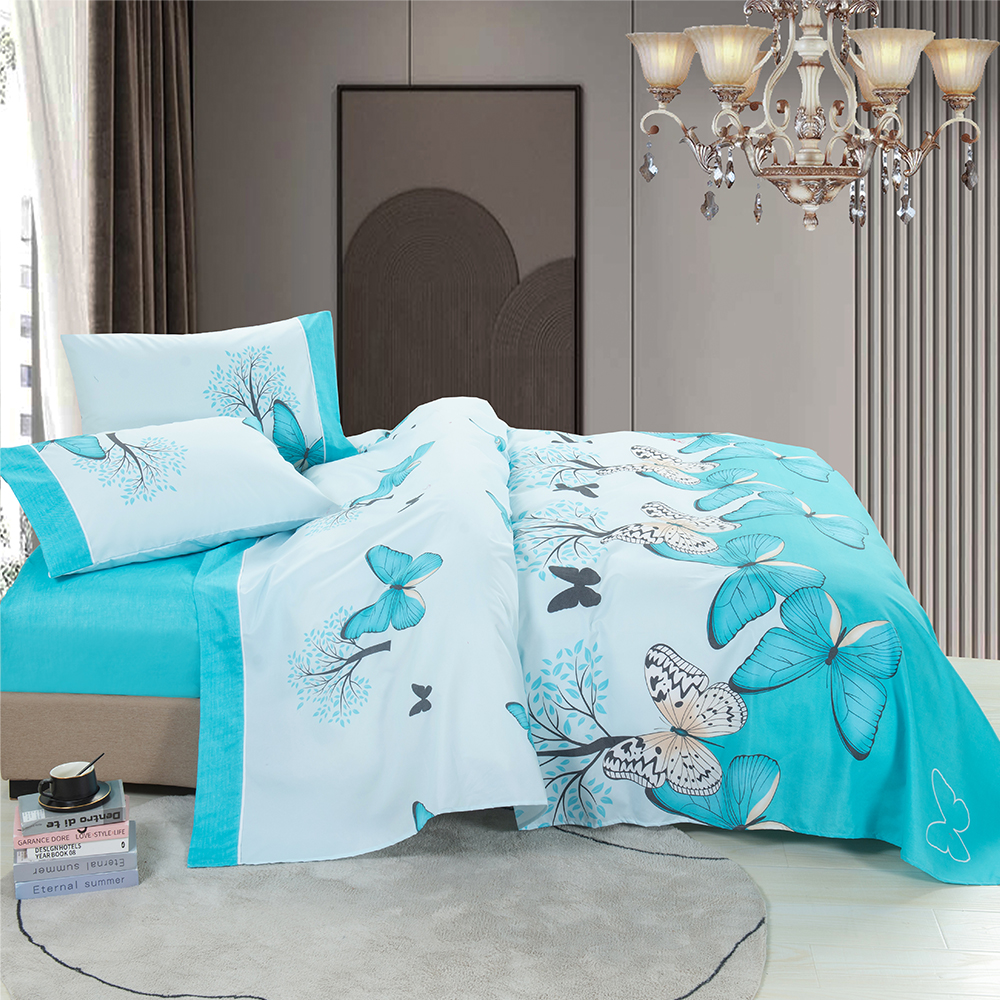 Wholesale 99.99% Polyester twill disperse printed 4 pcs bed sheets set SuppliersJiangsu Mengjini Technology Group Co., Ltd. is China Wholesale 99.99% Polyester twill disperse printed 4 pcs bed sheets set Suppliers and...View Product → set, which pairs a 99.99% polyester twill base with a high-color disperse print.
 - Pigment printing applies color onto the surface of the fabric. It is more economical, but the finish can stiffen the hand feel, so it suits simple designs and budget orders with basic fastness requirements.
- Jacquard weaves the pattern directly into the fabric on the loom, creating a dimensional texture that reads as premium. It costs more and takes longer to produce, but it is the right choice for branded lines and hospitality programs.
- Satin is a weave structure rather than a print. Its smooth, glossy surface is commonly used for solid colors and minimalist designs that need an elegant presentation.
| Process | Appearance | Cost Position | Best Suited For |
|---|---|---|---|
| Disperse printing | Vivid, colorfast | Mid | Pattern-heavy retail programs |
| Pigment printing | Flat color, economical | Lower | Budget and short-run orders |
| Jacquard | Woven texture, premium | Higher | Branded and hospitality ranges |
| Satin finish | Glossy, smooth | Mid-to-high | Minimalist and solid-color designs |
A duvet cover factory able to run all four processes is a strong flexibility signal: you can place a budget pigment order this season and a woven jacquard program next season with the same supplier, under one quality system.
Solid, Printed, or Jacquard: Matching Products to Your Market
Solid-color duvet covers fit hotel projects and minimalist brands that need a calm, consistent presentation. Printed duvet covers dominate general retail and online marketplaces because pattern sells the first unit. Jacquard duvet covers belong in mid-to-high-end positioning, where the woven texture communicates quality more convincingly than a photograph alone.
Reversible designs (a pattern on one face and a complementary tone on the reverse) are especially effective on Amazon-style channels because one SKU delivers two looks, which lifts perceived value and gives listing photography a natural hero shot.
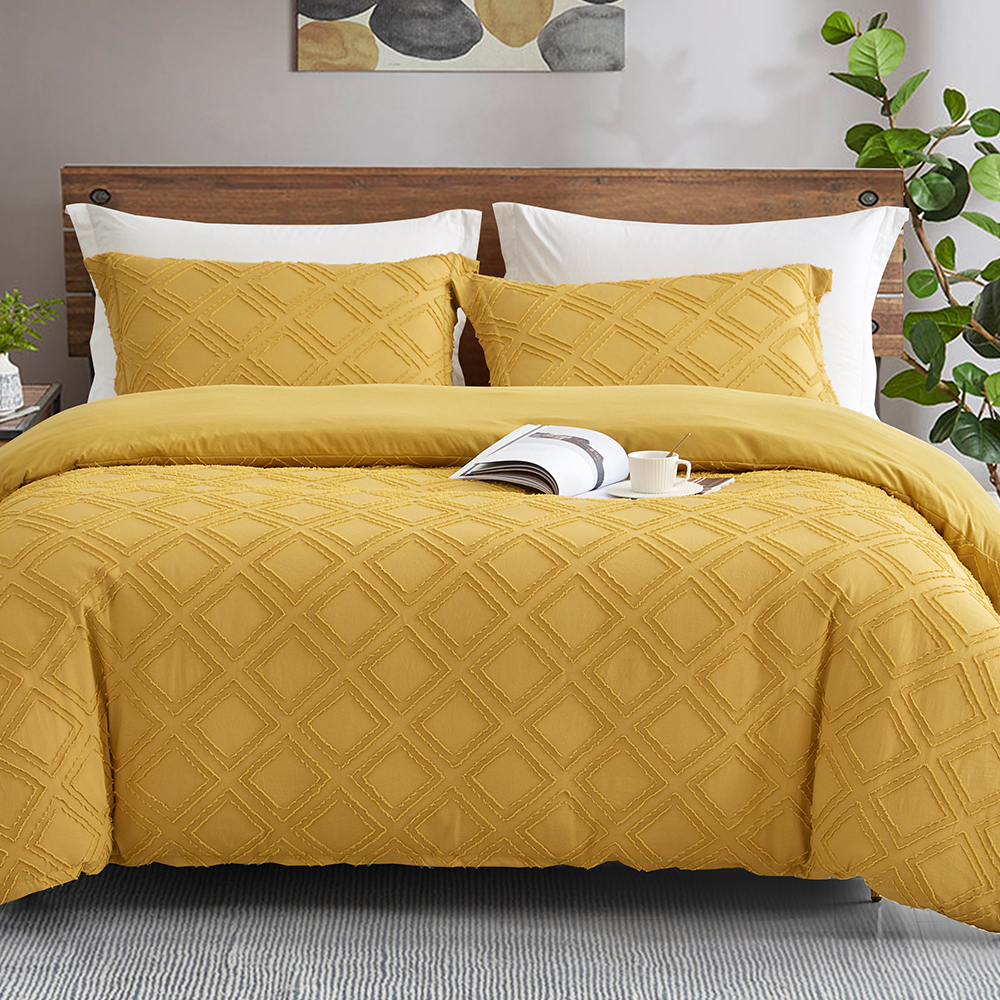
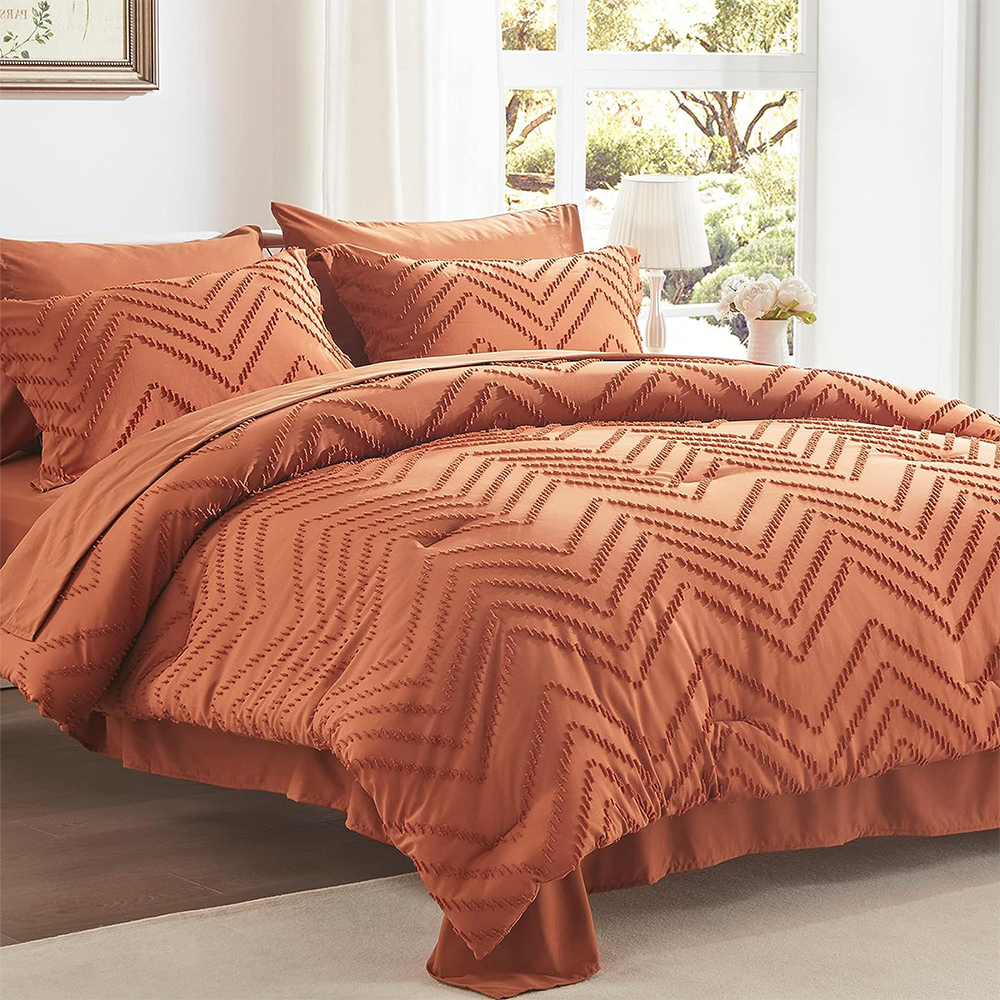
For a concrete example of how weave and design come together, see this boho duvet set with pillow shams. Its clipped, textured surface combines the visual depth of jacquard with a contemporary boho palette, a combination that performs well with e-commerce buyers.
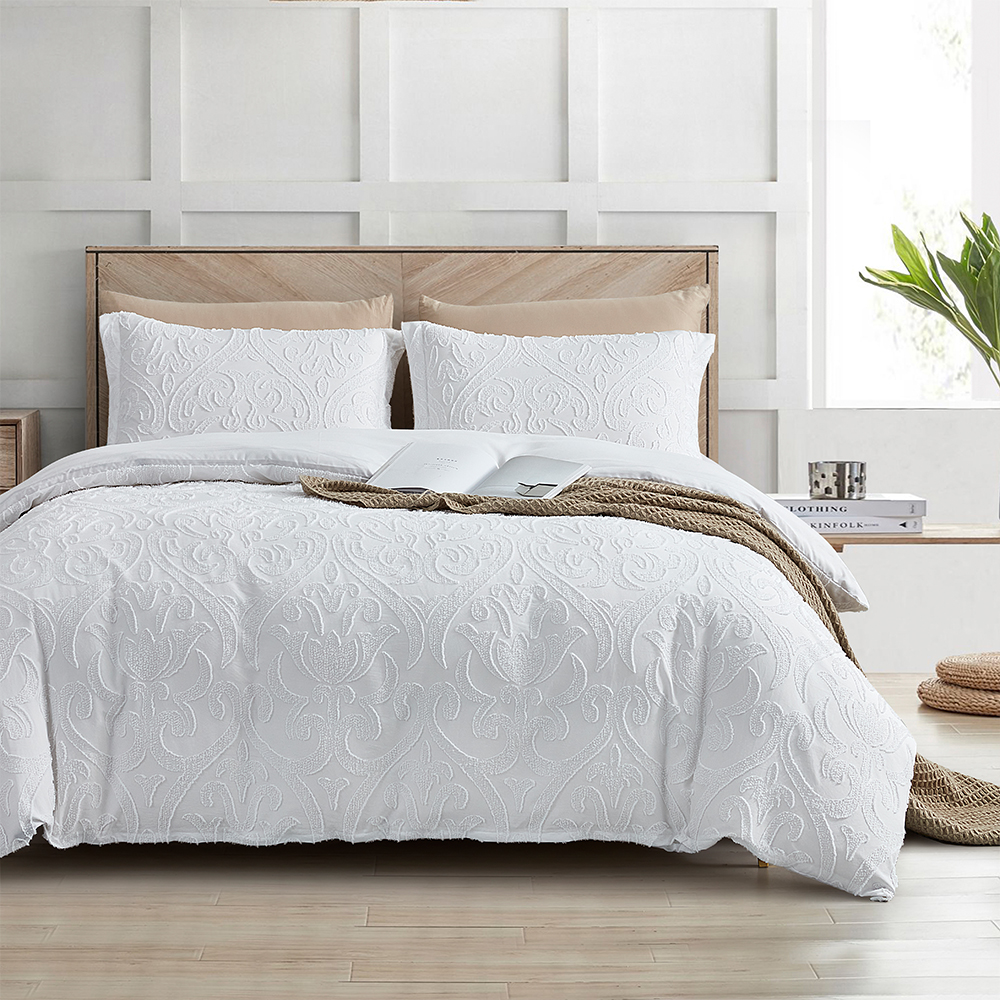 Wholesale Duvet Cover Suppliers, Duvet Cover FactoryJiangsu Mengjini Technology Group Co., Ltd. is China Duvet Cover Suppliers and Boho Clipped Duvet Set With Pillow Shames factory, we offe...View Product →
How to Evaluate a Duvet Cover Factory Before You Order
Not every supplier calling itself a duvet cover factory is equally equipped. Run this checklist before you commit to a bulk program:
- Category breadth. A multi-category factory (bed sheet sets, comforters, curtains, sofa covers) usually has stronger planning and purchasing power than a single-line workshop.
- Specification transparency. Does the supplier state fiber content, gsm, weave, and process on every product page? That precision is a reliable indicator of internal discipline.
- Customization response. Ask about OEM and ODM capability: custom sizes, color matching, labels, hang tags, and private-brand cartons.
- Sample discipline. A factory that can produce an accurate physical sample, with correct measurements and finishing, will usually replicate that standard in bulk.
- Export experience. Confirm the team works comfortably in your language and understands international documents, Incoterms, and third-party inspections.
When a supplier documents details such as 99.99% polyester, 85gsm twill, or 115gsm satin directly in product titles, it reflects the same exactness you can expect in production, packing, and paperwork.
The Bulk Ordering Process: From Inquiry to Delivery
Bulk duvet cover sourcing follows a predictable sequence. Knowing it in advance keeps you in control of the timeline and the budget:
- Inquiry and specification. Confirm sizes, fabric, gsm, process, quantity, minimum order requirements per size and color, and target price, and request a written specification sheet.
- Sampling. Ask for a physical sample and check hand feel, print registration, zipper or button quality, and seam finish.
- Bulk production. Agree on the production schedule and decide how you will receive progress updates.
- Quality inspection. Define acceptable quality levels, key defects, and the inspection stage (ideally before packing).
- Packaging and cartons. Specify folding method, polybag thickness, master carton dimensions, and export markings.
- Shipping and documents. Finalize Incoterms, packing list, commercial invoice, and bill of lading.
Working with a multi-category factory adds one practical benefit: you can consolidate duvet covers with bed sheet sets, comforters, or curtains in a single container and reduce per-unit freight costs.
Why Buying Directly from a Factory Beats Working with a Trader
The difference between a factory and a trading company shows up in four areas. Price transparency is the first: a factory negotiates from its cost base, while a trader layers a margin on top. Communication is the second: technical answers come from people who actually run the production lines. Customization is the third: a factory can adjust fabric, stitching, and packaging in real time, whereas a trader can only relay your request. Accountability is the fourth: when defects appear, you solve them with the party that manufactured the goods, which creates a much stronger incentive for corrective action.
Over time, the factory relationship protects your supply stability. Once a factory understands your volumes, seasonal patterns, and quality tolerance, subsequent orders move faster and more predictably. The supplier featured throughout this guide positions itself explicitly as a home textile factory, with eight product categories and specification-level documentation on materials and gram weights, exactly the kind of factory-direct signal to look for when you search for a duvet cover factory.
Partner with a Verified Duvet Cover Factory
A reliable supplier proves its capability through documented specifications, process variety, and product breadth, not through vague promises. The factory highlighted here offers 99.99% polyester programs across multiple gram weights, disperse and pigment printing, jacquard and satin series, plus cotton alternatives, and adjacent categories such as bed sheet sets, comforters, and curtains that support consolidated shipping.
When you are ready to compare specific items, browse the duvet cover collection and note the exact materials, weights, and finishes listed on each product page. Then send an inquiry with your target market, projected volumes, and quality expectations. The precision of the response, and the sample that follows, will tell you more about the factory than any brochure.
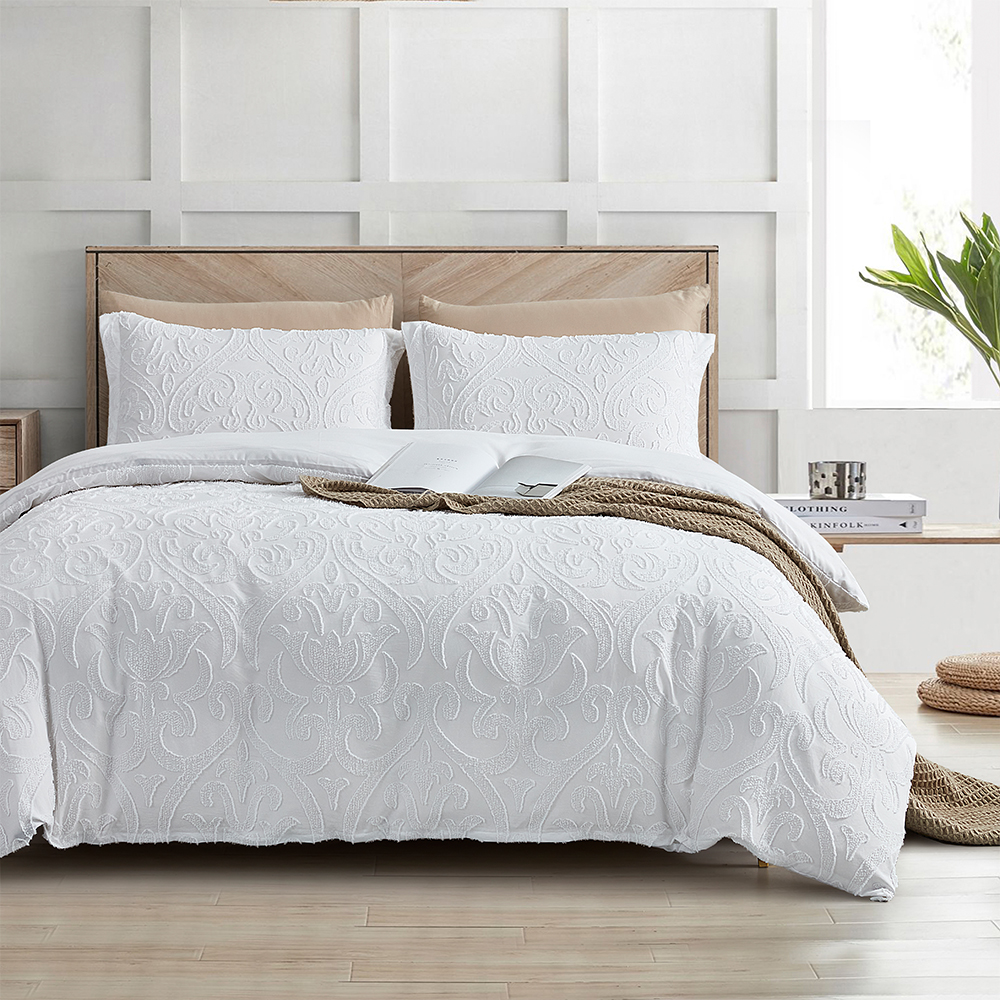 OEM/ODM Duvet Cover Manufacturers, Duvet Cover FactoryJiangsu Mengjini Technology Group Co., Ltd. is China Duvet Cover manufacturers and Duvet Cover factory, we offer OEM/ODM Duvet Cover.View Product →
 previous post