

 English
 русский
 Español
Bedding Measurement Chart: The Complete Guide to Bedding Sizes and Dimensions
Bed size names travel well, but dimensions rarely do. A queen mattress in the United States is 60 by 80 inches. In the United Kingdom, a queen is 60 by 78 inches. In Europe, the same label usually refers to a 160 by 200 centimeter mattress, which is about 63 by 79 inches. For a wholesale buyer sourcing sheet sets from an overseas home textile factory, those differences decide whether a fitted sheet stays anchored on the mattress, whether a comforter hangs at the right depth, and whether the end customer keeps the order or returns it. A bedding measurement chart turns that ambiguity into clear, shared numbers.
Why Bedding Measurements Are Not Universal
Bed sizes are conventions that grew out of local furniture markets, not a single global standard. North American sizes were built around mass production in the mid-twentieth century. The UK and European markets developed their own metric conventions, and Asian bedding manufacturers often serve multiple export markets with additional size variations. The practical effect is that a bed called "king" in one country is close to a "queen" in another. A UK king mattress is about 60 inches wide, which is similar to a US queen. A US king is 76 inches wide, which is closer to a UK super king.
When a product is cut to one regional standard and sold in a different region, the mismatch shows up at the customer's doorstep. That is why the first question in a wholesale bedding conversation should not be "what size?" but "which size standard, and what exact dimensions?" A bedding measurement chart that labels each standard clearly removes most of that risk before the first sample is made.
Standard Bed Dimensions by Region
The table below summarizes commonly used mattress dimensions in the US, UK, EU, and major Asian markets. Use it as a starting point, then confirm the actual dimensions with your supplier.
| Bed Type | US (inches) | UK (inches) | EU (cm) | Asia Typical (cm) |
|---|---|---|---|---|
| Twin / Single | 38 × 75 | 36 × 75 | 90 × 200 | 90 × 190 |
| Twin XL | 38 × 80 | — | — | — |
| Full / Double | 54 × 75 | 54 × 75 | 140 × 200 | 135 × 190 |
| Queen | 60 × 80 | 60 × 78 | 160 × 200 | 150 × 200 |
| King | 76 × 80 | 60 × 78 | 180 × 200 | 180 × 200 |
| California / Super King | 72 × 84 | 72 × 79 | 200 × 200 | 200 × 220 |
Asian values are representative rather than uniform. If you source from China, Japan, Southeast Asia, or the Middle East, request the factory's actual finished dimensions instead of assuming a regional label.
The Components of a Bedding Set and Their Measurements
A bedding measurement chart has to cover more than the mattress. A set of bed linens typically has several pieces, each with its own finished measurement. On most Chinese home textile factory export lists, sets are configured by piece counts:
| Set Configuration | Components | Most Common Usage |
|---|---|---|
| 4-piece sheet set | 1 fitted sheet, 1 flat sheet, 2 pillowcases | US, Australia, e-commerce |
| 5-piece set | 4-piece set plus 1 pillow sham or extra pillowcase | EU, US retail |
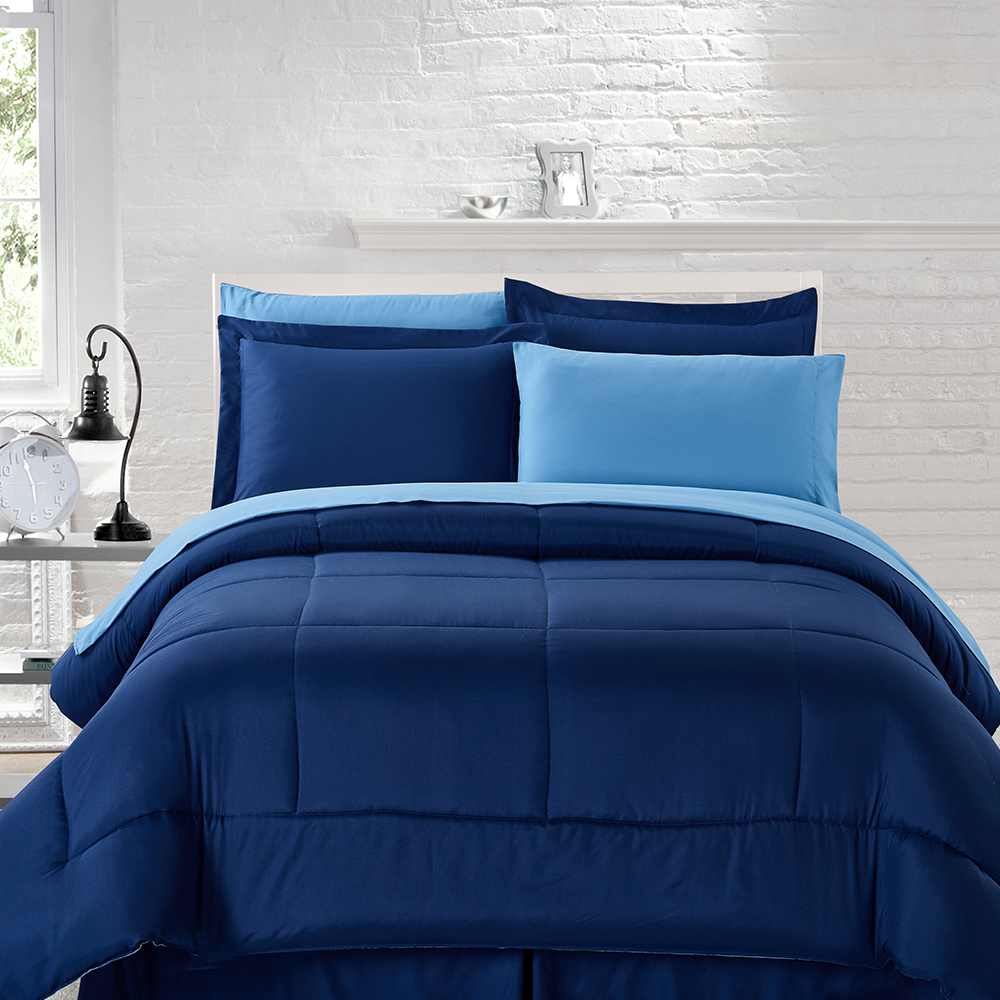
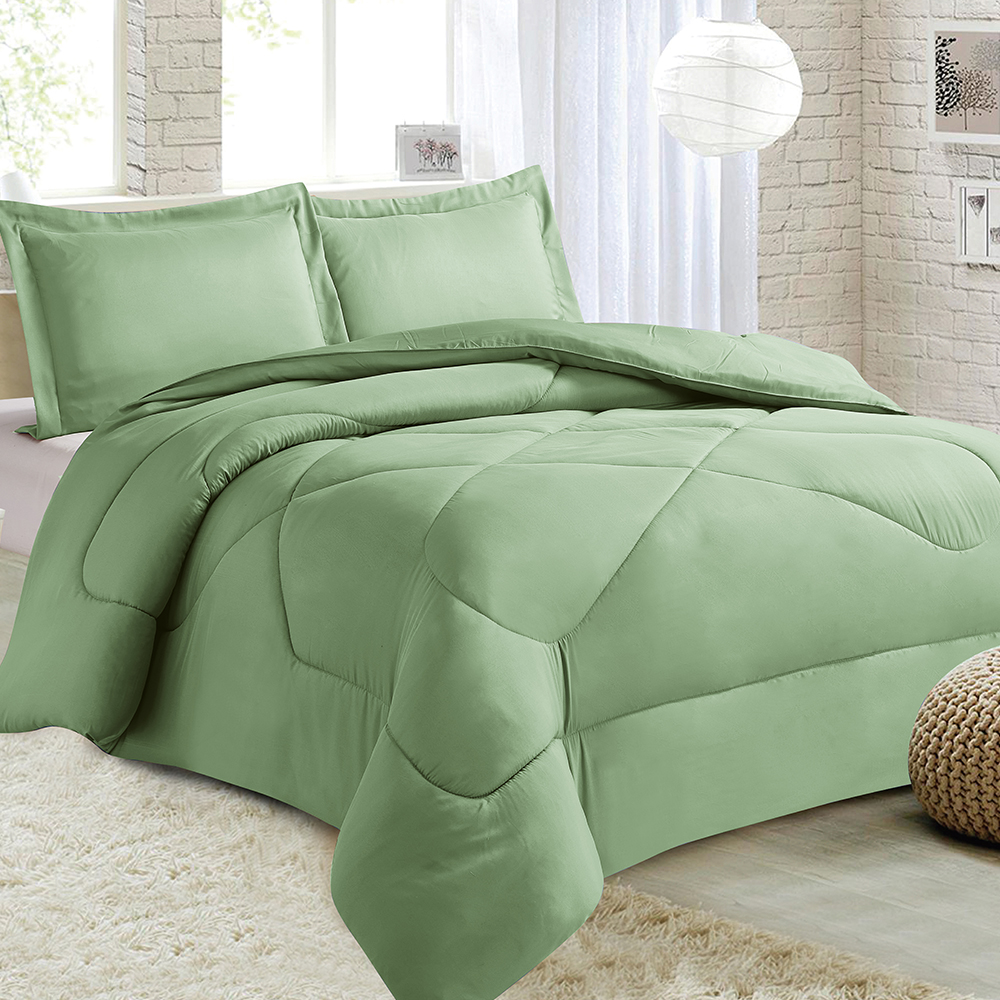
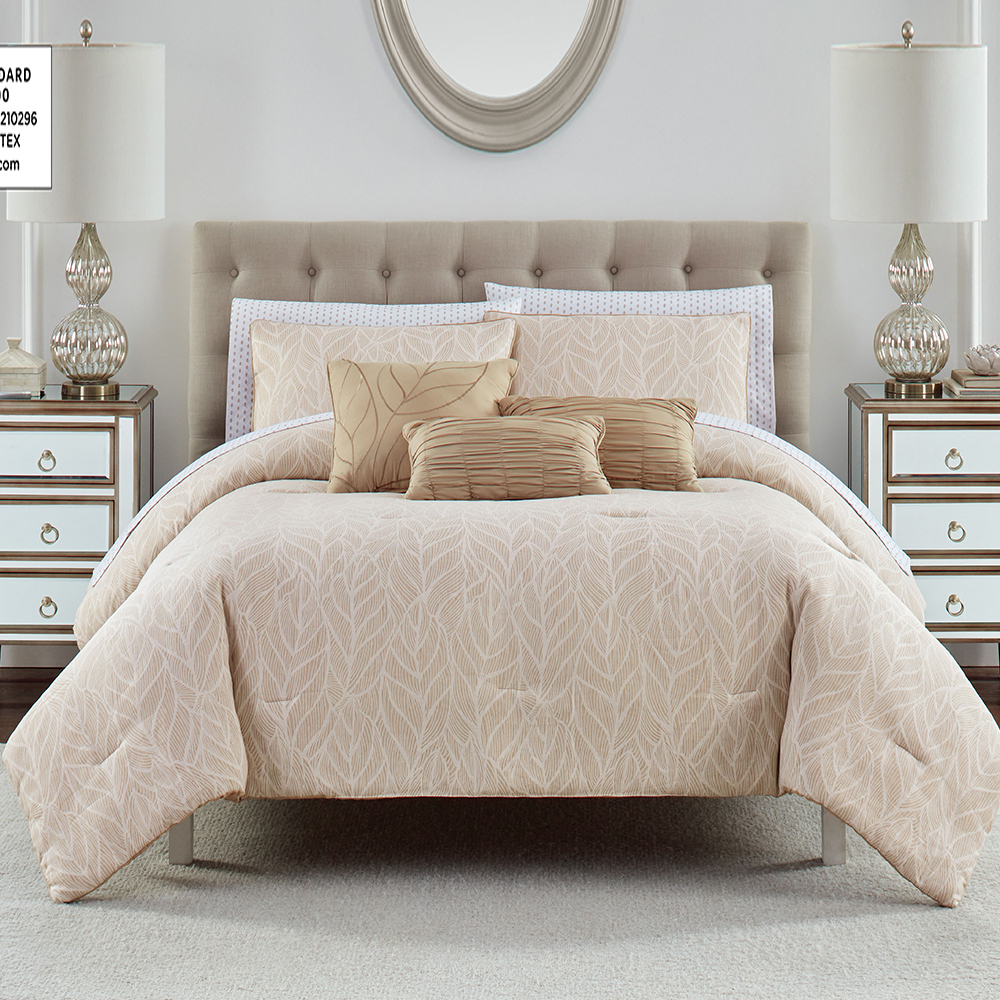
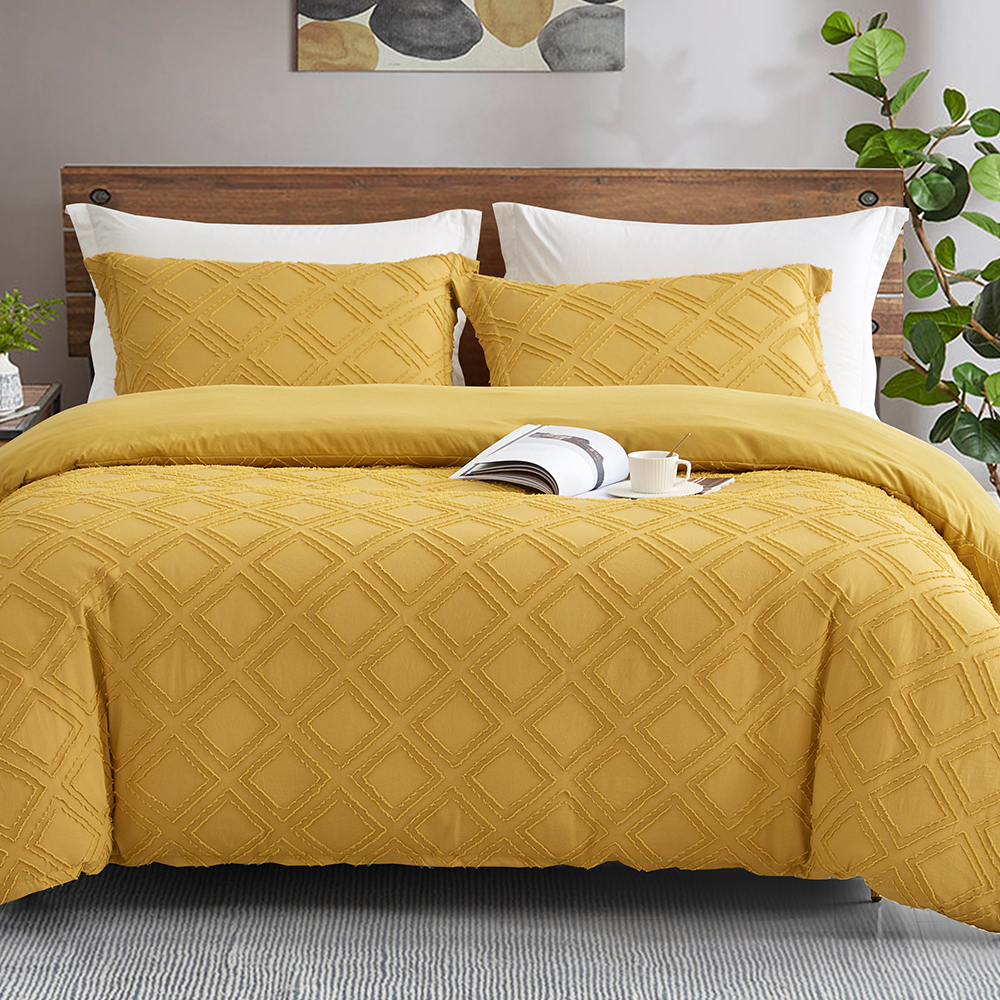
| 7-piece comforter set | Comforter, fitted sheet, flat sheet, 2 pillowcases, 2 pillow shams | US bed-in-a-bag, hotel projects |
Each component has to be specified in the same unit system. For a US queen 4-piece set, the fitted sheet is cut for a 60 × 80 inch mattress, the flat sheet is typically around 96 × 102 inches, and the pillowcases are 20 × 26 inches. A European version for a 160 × 200 centimeter mattress will use a 160 × 200 centimeter fitted sheet, a flat sheet around 240 × 260 centimeters, and 50 × 70 centimeter pillowcases. The names sound the same, but the cutting orders are completely different. The comparison below shows representative finished sizes for a queen-level set in both systems.
| Component | US Queen (inches) | EU Queen (cm) |
|---|---|---|
| Fitted sheet | 60 × 80, pocket 14–18 | 160 × 200, pocket 25–30 |
| Flat sheet | 96 × 102 | 240 × 260 |
| Comforter / duvet | 88 × 92 | 200 × 220 or 220 × 240 |
| Pillowcase | 20 × 26 | 50 × 70 |
| Pillow sham | 20 × 26 | 50 × 70 |
When you compare factory offers, look at the finished measurement of every component, not just the set name. A 7-piece comforter set from one factory can use a completely different comforter width than another factory's 7-piece set, even for the same target mattress.
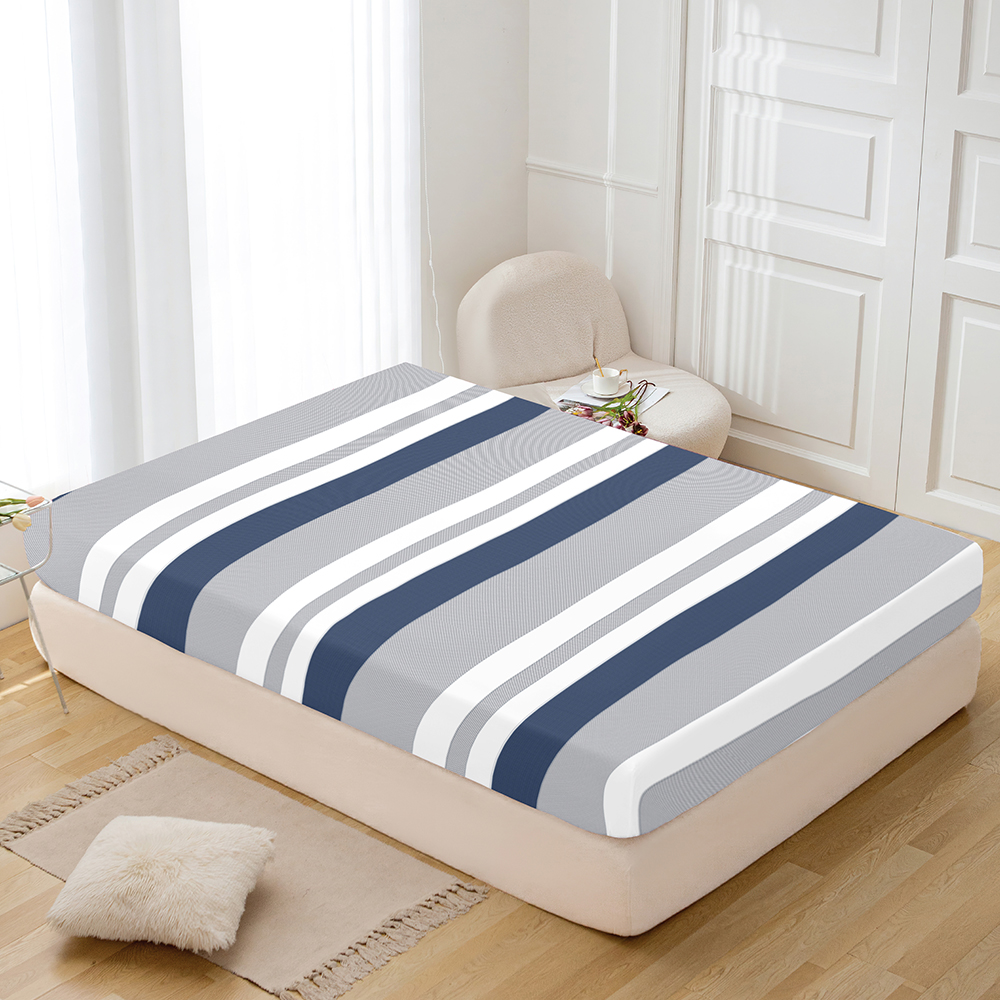
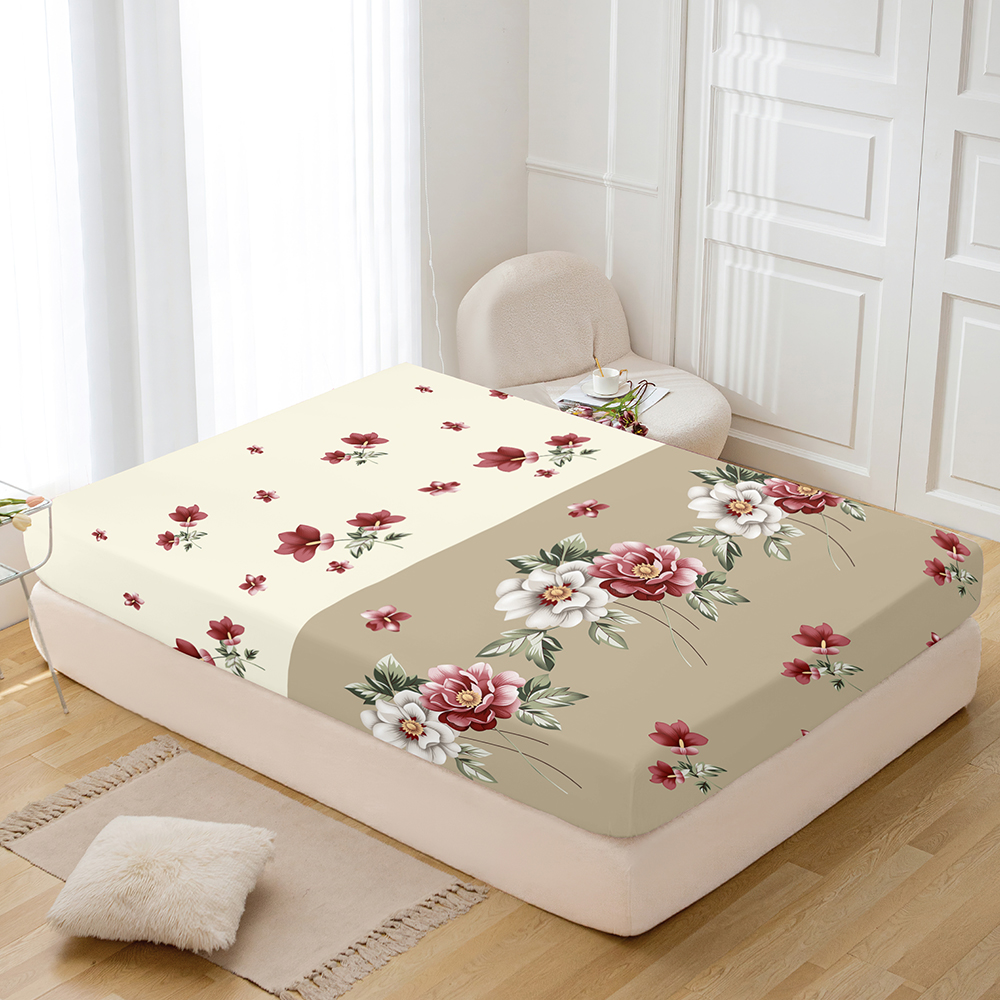
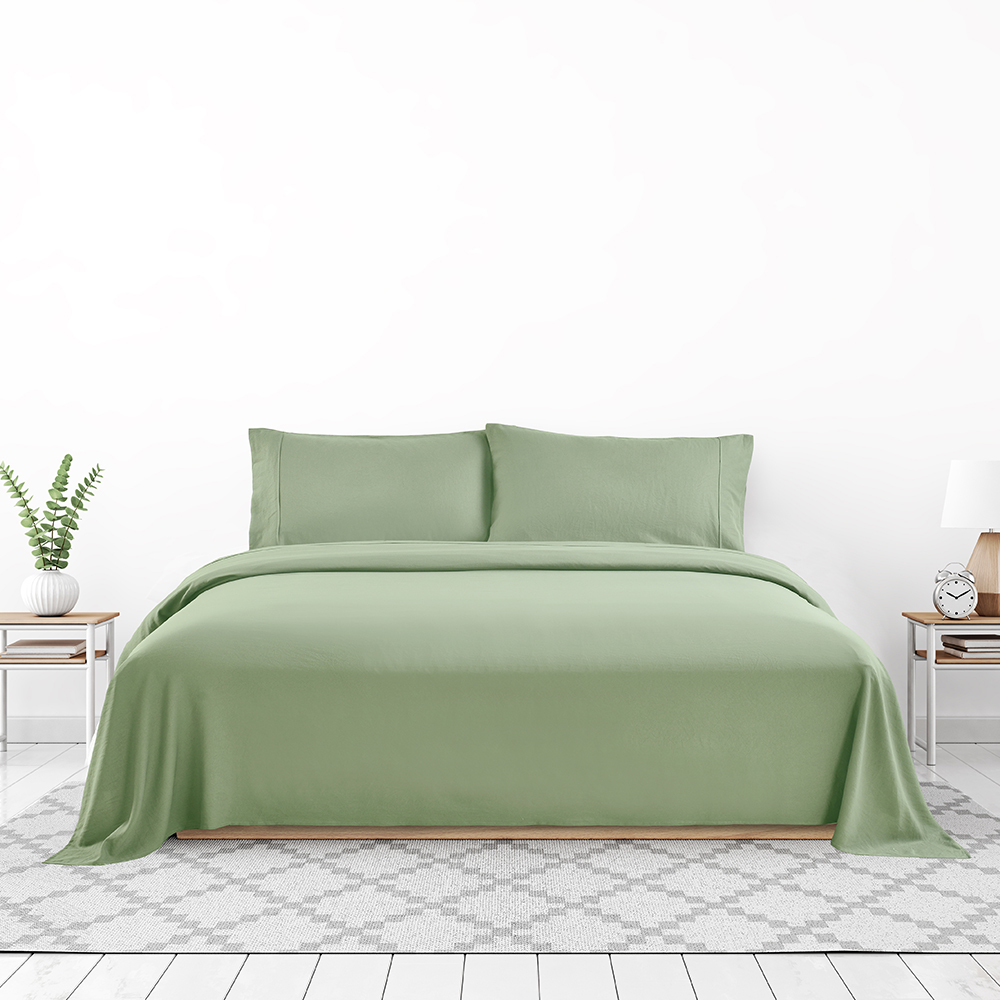 Polyester Plain Bed Sheet Set in 75g/90g/100gCheck the finished measurements of this polyester bed sheet set, as factory sets vary in width. Measuring your actual mattress first helps prevent loose or ill-fitting sheets.View Product →
How to Measure a Mattress Correctly
A good chart gives you the standard dimensions, but the fastest way to avoid a mismatch is to measure your actual target mattress. These steps keep you out of that trap:
- Measure the width across the mattress surface at its middle point. Do not measure the bed frame or base.
- Measure the length along the center line from the top edge to the bottom edge.
- Measure the depth, or thickness, from the bottom edge of the mattress to the top of the quilting surface.
- Add the thickness of any mattress topper. A 22-centimeter mattress with a 5-centimeter topper is effectively 27 centimeters deep.
- Write the result in both centimeters and inches, and clearly state which unit you used in your order documents.
In everyday factory correspondence, orders sometimes arrive with only the bed label and a set number, and the factory has to make assumptions about every other variable. Defined numbers on a chart are the most direct way to eliminate those assumptions.
Fitted Sheet Depth: The Measurement Most Buyers Forget
Two fitted sheets with the same width and length can be completely different products when their pocket depths differ. A fitted sheet cut with a 25-centimeter pocket fits a 25-centimeter mattress. Put it on a 30-centimeter mattress, and the elastic corners will be riding up by morning.
A useful purchasing rule is to specify at least 5 centimeters of pocket depth beyond your total mattress and topper height. Deep-pocket sheets have become normal for modern thicker mattresses, and this requirement should be on the chart. Polyester fabrics make this predictable because their shrinkage is much lower than that of cotton, which is one of the reasons factories rely on 99.99% polyester for depth-critical fitted sheets.
Comforter and Quilt Size: Overhang Defines the Look
Comforters and quilts are not cut flush to the mattress. They are made larger so they hang down over the sides and the foot of the bed. On a 60-inch queen mattress, a typical US queen comforter at 88 × 92 inches leaves roughly 14 inches of drop on each side. In metric markets, a 180 × 200 centimeter mattress is commonly paired with a 200 × 230 centimeter duvet insert, giving a similar proportional coverage. The right number depends on the customer's expectation; a short 10-centimeter drop looks modern, while a deep overhang feels traditionally generous.
For factory buyers, the packaging method does not change the finished cut. A compressed comforter for export carries the same sewn dimensions as the one displayed on the showroom bed. Keep the measurement of the finished product on the chart, not the packed size.
Mattress dimensions also interact with your sleep preferences. Once the sizes are correct, choices like fabric weight, fill density, and breathability influence whether the finished set suits the user's sleeping habits, so it is worth learning more about how to choose the perfect bedding for your sleep style before you commit to a volume order.
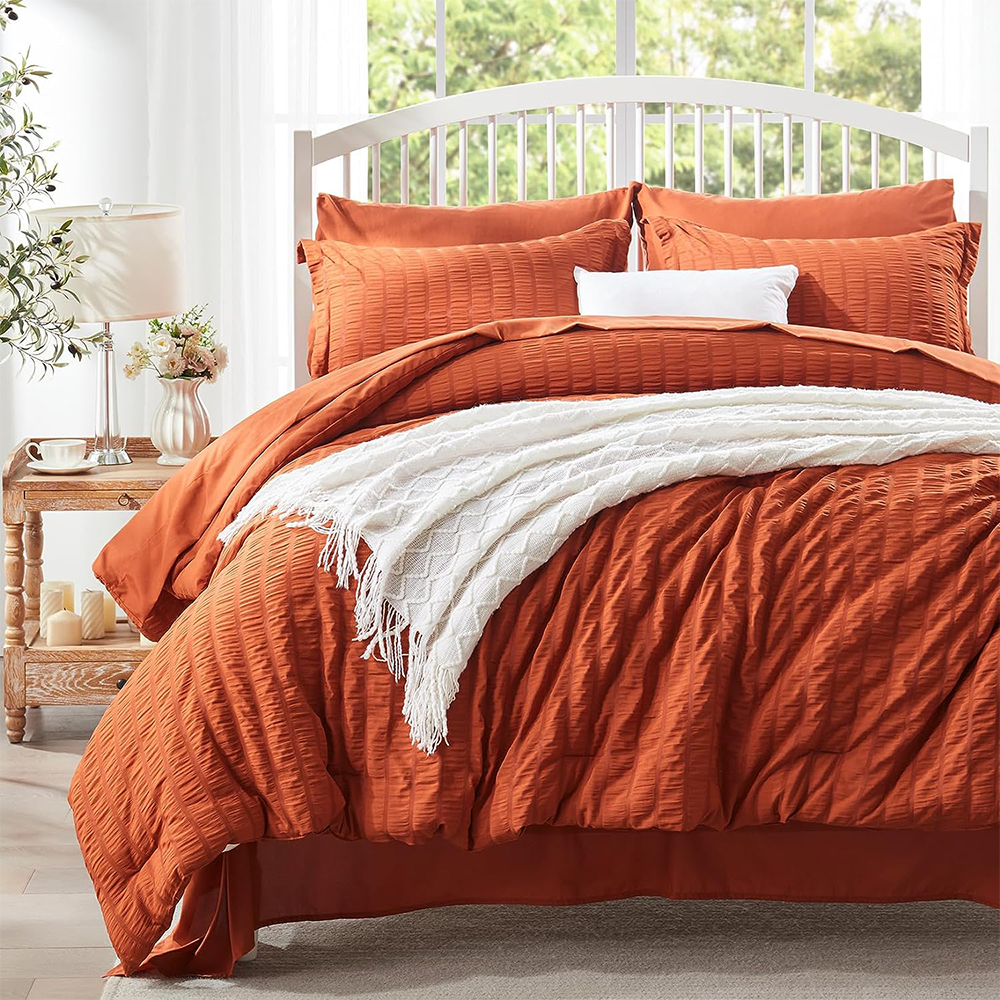
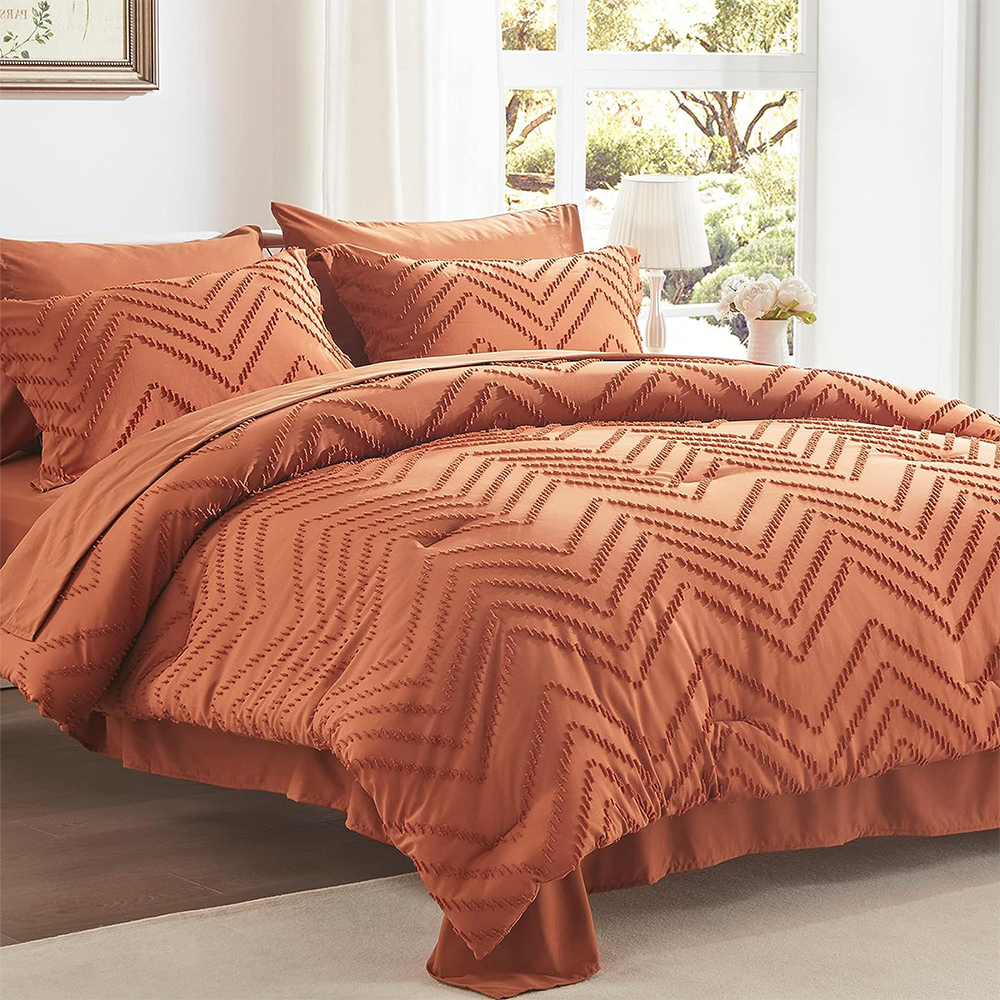
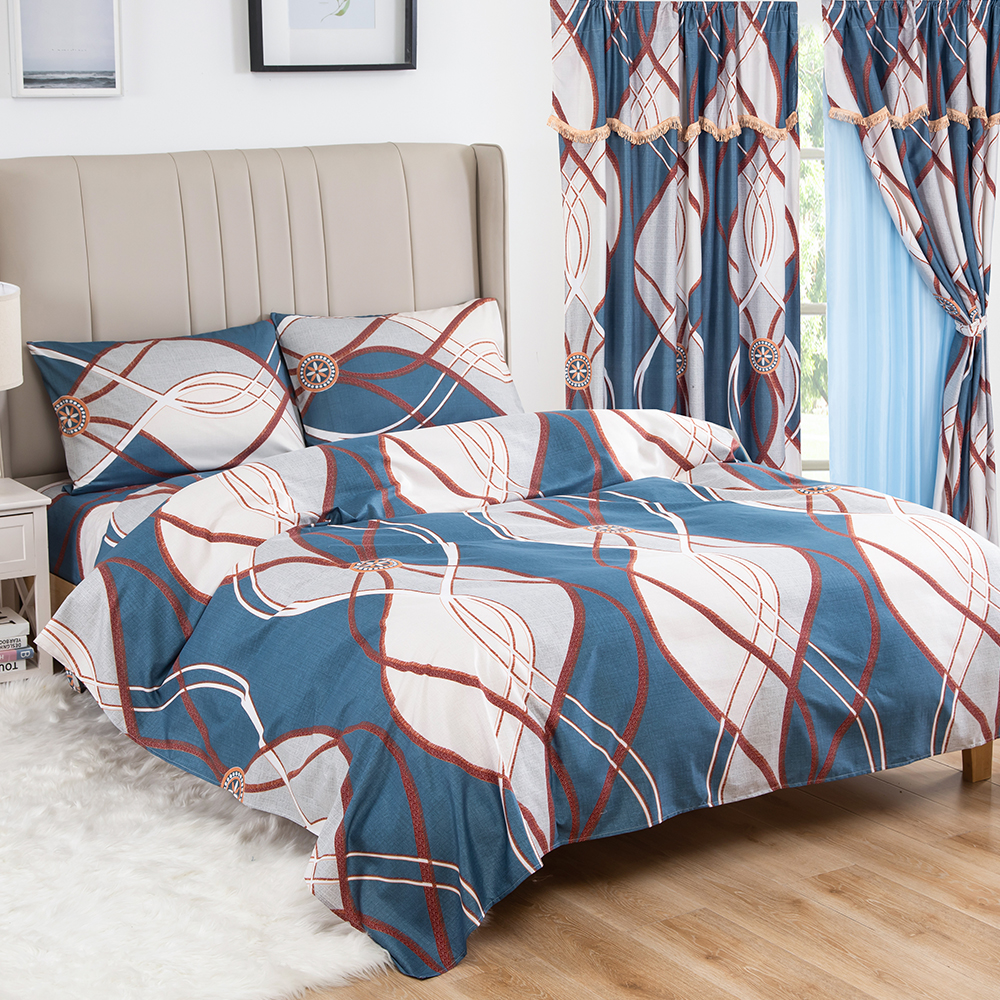
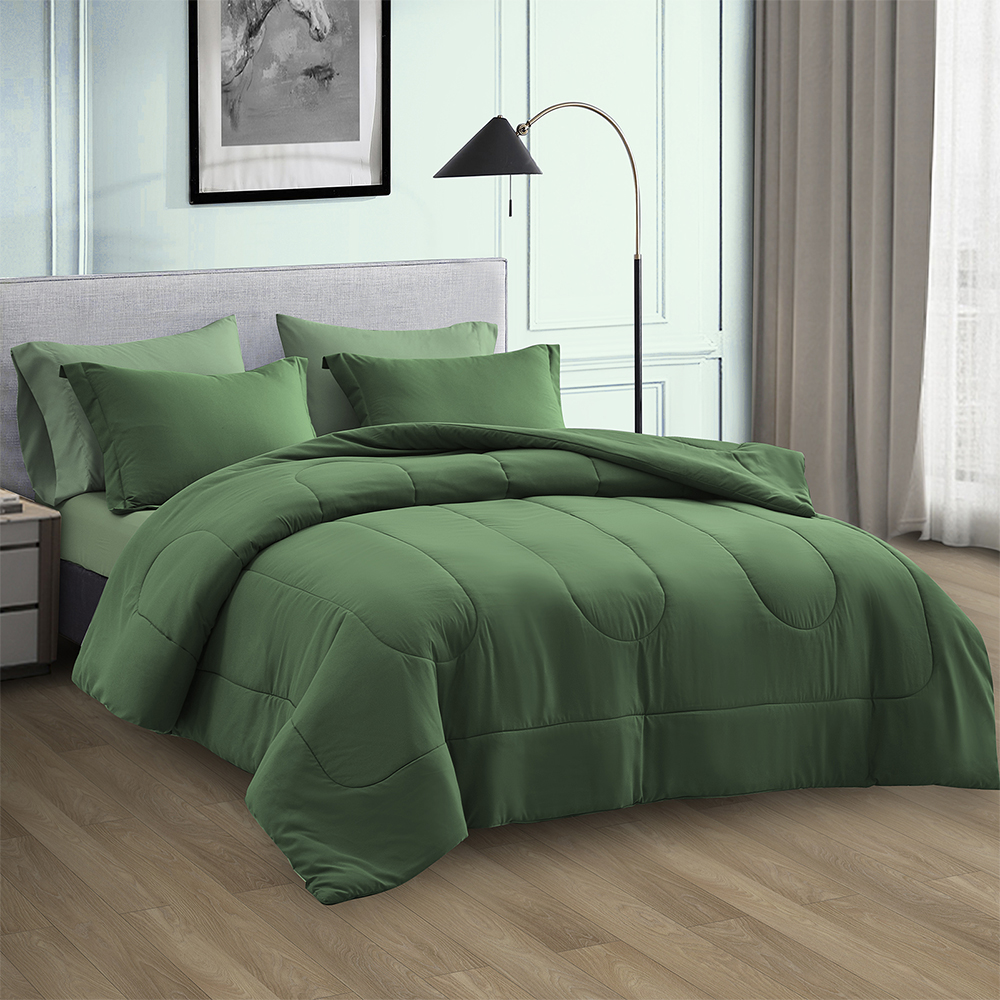 Solid Color Polyester 7-Piece Comforter SetThis seven-piece solid comforter set pairs with your mattress size and sleep preferences. Verify its dimensions and fill weight to match your bed depth and comfort needs.View Product →
Mattress Pads and Protectors: Precision Is Non-Negotiable
Mattress pads and protectors belong to the fitted family. They stretch over the mattress and hold on with elastic or a fitted skirt, so they have no overhang allowance. A pad made for a 25-centimeter mattress will slowly work its way off the corner of a 35-centimeter pillow-top. When a pad is listed on your chart, include the mattress width, length, and total depth, as well as the thickness of any topper. Waterproof and quilted protectors, in particular, are often ordered as part of a set with other pieces, and getting the pocket geometry right is the difference between a branded product and a complaint ticket.
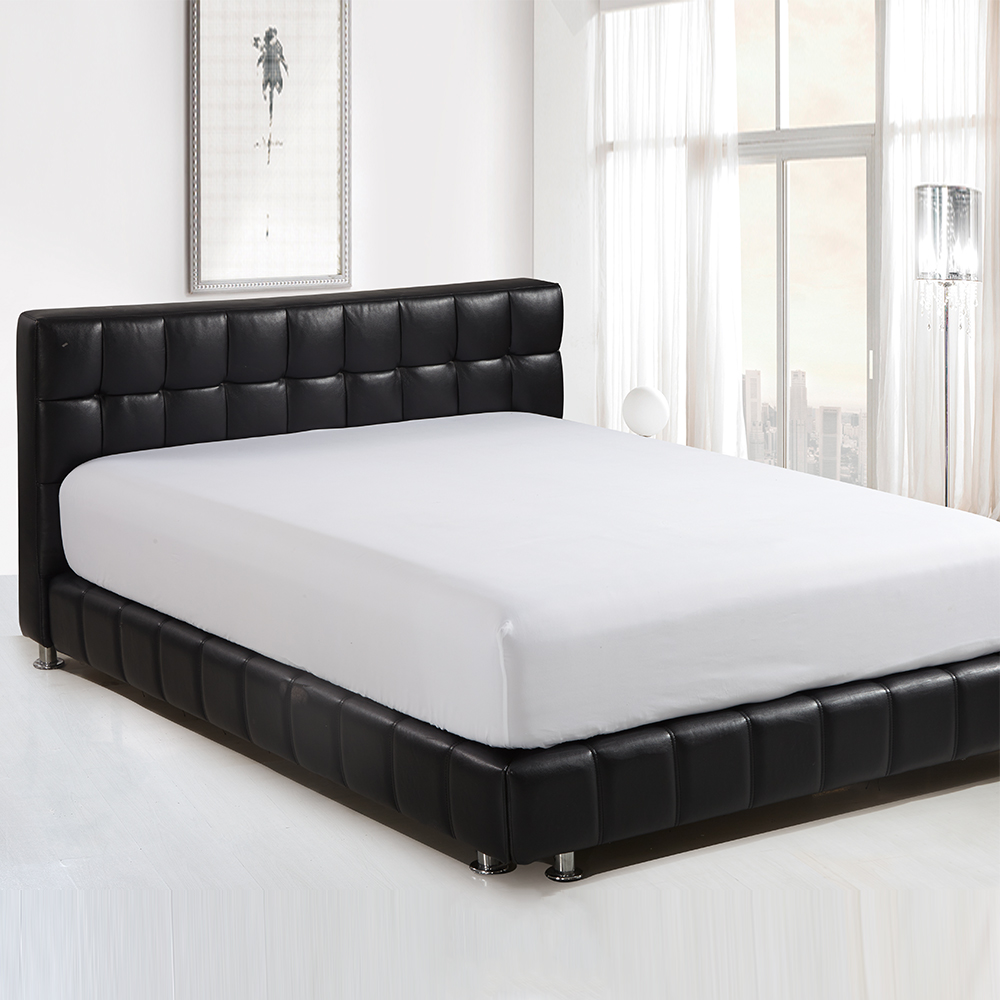
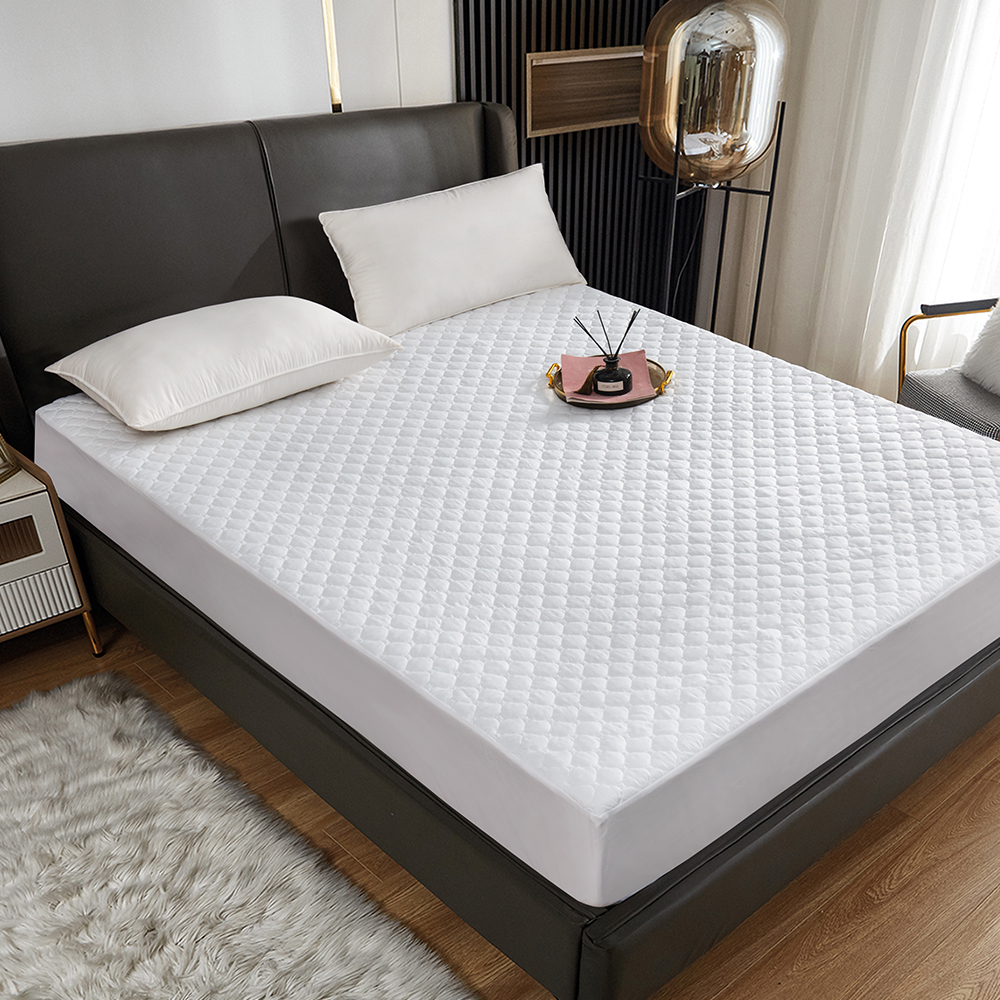 Waterproof Pinsonic Polyester Mattress PadThis waterproof mattress pad relies on a snug fitted pocket. Include your mattress width, length, and total depth to ensure it stays in place, especially on thicker mattresses.View Product →
Common Mistakes in Wholesale Bedding Orders
After years of sample approvals and production runs, a few mistakes show up again and again:
- Assuming that "queen" or "king" means the same dimension across markets.
- Mixing inches and centimeters within one specification sheet.
- Forgetting to include mattress depth when fitting sheets or pads.
- Basing pillowcase size on one regional standard and the bed size on another. US standard is 20 × 26; EU standard is usually 50 × 70 centimeters.
- Treating comforters and protectors the same way. Comforters need overhang; protectors must match exactly.
- Not specifying a cutting tolerance. Factories typically work within a 2–3 centimeter tolerance on finished bedding, and your quality checklist should say which side of that tolerance is acceptable.
What to Confirm Before You Place a Bedding Order
Use the chart as a pro-forma checklist before you sign:
- Confirm the target market and the exact mattress dimensions used in that market.
- Confirm the set configuration and the finished measurement of every component.
- Include mattress depth and topper thickness in the specification.
- Request a pre-production sample and test it on an actual mattress of that size.
- State the unit system explicitly on every line, write centimeters or inches, not just numbers.
- Ask about shrinkage and care-label requirements, especially if cotton blends are involved.
A bedding measurement chart is not a piece of paperwork. It is the shared language between you and the factory. Once every component is defined in numbers, mattress, fitted sheet, flat sheet, comforter, pillowcases, and protector, the sampling process becomes faster, the production line runs cleaner, and the container arrives without size surprises. If a supplier can only give you a set name and a vague promise, that is the signal to put the measurements in writing before you pay. You can also review the factory's full product range to compare how different set configurations are actually presented in production.
 previous post