

 English
 русский
 Español
Bed Sheets for Sensitive Skin: How to Choose Fabrics That Won't Irritate
When you wake up with red, itchy skin, the first suspects are usually skincare products, laundry detergent, or something you ate. But for people with eczema, contact dermatitis, or simply reactive skin, the real culprit is often the surface you spend a third of the day lying on: your bed sheets.
The short answer is that no single fabric removes all skin reactions. What matters is how fiber type, weave density, dye chemistry, finishing, and washing habits work together. Once you understand these factors, choosing bed sheets for sensitive skin becomes a repeatable process, whether you are buying one set for your bedroom or coordinating a wholesale order for a hotel, clinic, or retail brand.
Why Sheets Irritate Sensitive Skin
Before comparing fabrics, it helps to know what actually triggers a reaction. Textile engineers and dermatologists tend to point to four causes:
- Coarse fibers. Short, stiff fibers poke or abrade the top layer of skin, especially when the weave is loose.
- Residual chemistry. Dyes, softeners, anti-wrinkle resins, and formaldehyde-based finishes can remain on the fabric when rinsing is not thorough.
- Dust mites. They feed on dead skin cells, and their droppings are a common allergen even when the fiber itself is harmless.
- Heat and humidity. Trapped sweat increases friction and makes the skin barrier more permeable to irritants.
The practical impact: a sheet that feels soft in the box can still irritate at night if the fibers are short, the finish is harsh, or the fabric holds moisture against the skin. That is why sensitive-skin bedding decisions should be based on measurable properties, not just a pleasant hand feel.
Which Sheet Materials Are Truly Gentle on Skin
Fiber content is the starting point. Cotton is the classic choice because it breathes, absorbs moisture, and causes little static. For sensitive skin, the quality of the cotton matters more than the label: long-staple cotton with a dense weave is smoother and more durable than short-fiber cotton with a loose weave. The trade-off is that cotton holds moisture and can host dust mites, so it needs regular washing in warm water.
Polyester is more nuanced than its reputation suggests. Fine polyester microfibers can be extremely smooth, and because the fabric does not absorb moisture the way cotton does, dust mites are less likely to thrive. The catch is breathability; a dense polyester sheet can trap heat, which aggravates sweat-related itch. That is why the weight and construction of the polyester fabric are the deciding factors.
Satin offers the lowest-friction surface of any common bedding material. If you wake up with creases on your face or red marks on your cheeks, a satin pillowcase reduces the rubbing and keeps your pillowcase from pulling at your skin. Polyester satin provides that smoothness at a fraction of the cost of silk.
Bamboo and lyocell are also popular for reactive skin. They are soft, breathable, and naturally smooth, although their allergen resistance and durability vary by brand and manufacturing process.
| Material | Surface softness | Breathability | Dust mite resistance | Friction | Best suited for |
|---|---|---|---|---|---|
| Cotton | High | High | Moderate | Low to moderate | Most skin types; classic year-round option |
| Polyester microfiber | High | Medium | High | Moderate | Allergy-prone sleepers on a budget |
| Polyester satin | Very high | Medium | High | Very low | Facial irritation and overnight friction |
| Bamboo / Lyocell | High | Very high | Moderate | Low | Hot sleepers with reactive skin |
The key takeaway is that no single material wins on every line. A polyester sheet with a dense weave can feel clammy; a cotton sheet with a rough finish can feel scratchy. Evaluate the sheet as a complete system, including weave, weight, and dye method.
Weave, Weight, and Finish Matter as Much as the Fiber
Two sheets made from the same fiber can feel completely different. The weave determines how the threads lie on the surface. Percale is crisp and breathable but can feel stiff. Sateen has a smoother, lustrous surface because more threads are exposed on top. Twill is durable and slightly heavier. For sensitive skin, sateen or a fine twill usually feels gentler than a coarse percale.
Thread count is a useful proxy but not a guarantee. It measures weave density, not fiber quality. A 300-thread-count sheet made from long-staple cotton can outperform a 1000-thread-count novelty fabric that uses multiple twisted yarns to inflate the number. For polyester bedding, the more reliable metric is fabric weight, expressed in grams per square meter (gsm). In the home textile industry, 75gsm is light and economical, 85gsm is standard, and 115gsm feels noticeably denser and smoother. Higher gsm generally translates to a more stable and comfortable sheet for sensitive skin.
Dyeing and printing methods also affect the surface. Disperse printing embeds color inside polyester fibers, so the surface stays smooth and color lasts longer. Pigment printing lays color on the surface, which can feel stiffer and wear off over time. If the sheet will touch reactive skin, solid-dyed or disperse-printed fabrics are safer bets than heavy pigment prints.
One simple upgrade is to replace a regular pillowcase with a satin pillowcase. The smooth surface reduces facial friction, keeps hair from catching, and helps your skincare products stay on your skin instead of the fabric.
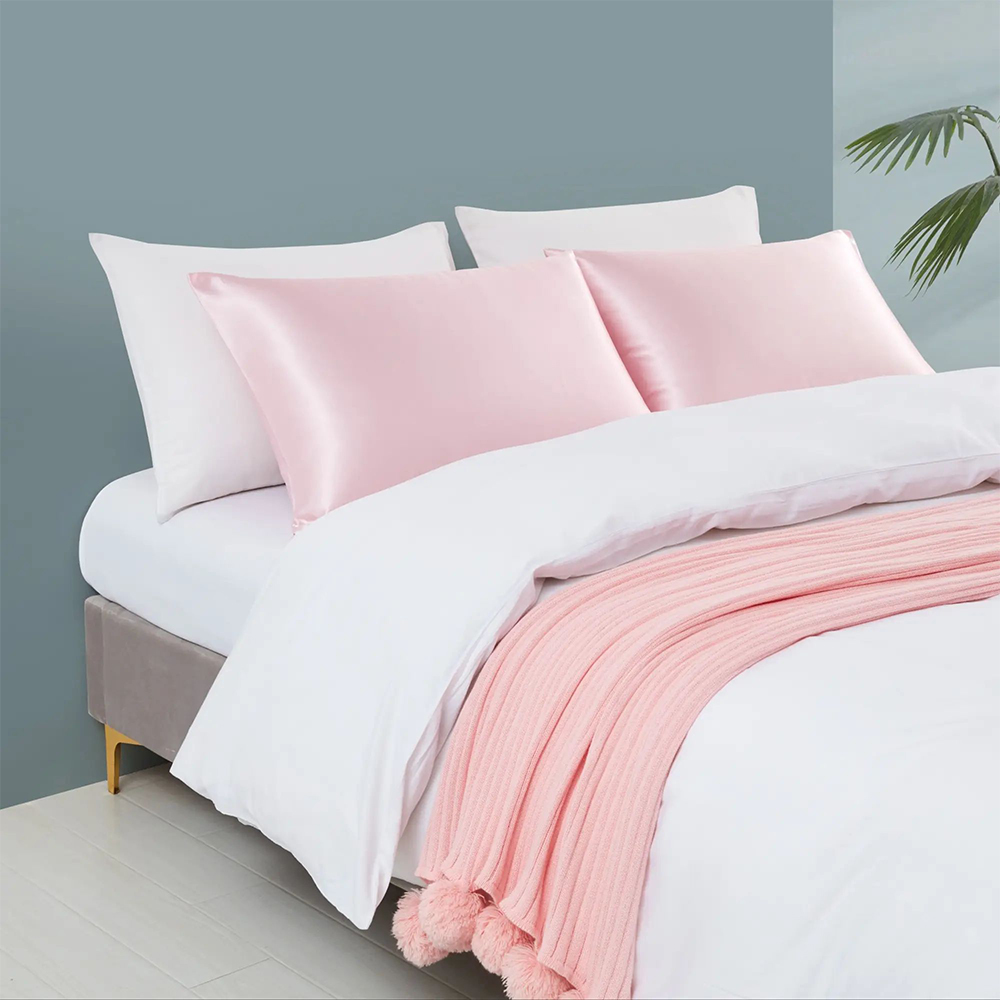 Soft and Smooth Solid Satin PillowcasesThese satin pillowcases offer a smooth surface that reduces facial friction and prevents hair catching, making them a simple upgrade for sensitive skin sleepers seeking better skin and hair care.View Product →
A Practical Checklist for Sensitive-Skin Bedding
When you are ready to buy, run through this checklist:
- Start with the fiber. Choose cotton for breathability, fine polyester for dust-mite resistance, or satin for low friction.
- Check the weight. For polyester, look for at least 85gsm; 115gsm is even better for a dense, smooth surface.
- Ask about dye and print method. Solid-dyed or disperse-printed fabrics are less likely to feel rough than pigment prints.
- Wash before the first use. This removes loose dye and manufacturing residue. In general, follow the care instructions for your home textiles to keep them clean and gentle, such as those outlined in our guide on how to care for and clean a solid comforter set.
- Add a barrier. A fitted mattress pad or protector keeps dust mites, pet dander, and perspiration from building up in the mattress core.
- Re-evaluate after three washes. Fabric softness often changes after the first few laundry cycles; a sheet that feels rough in the packet may soften, while one that feels silky may lose its finish.
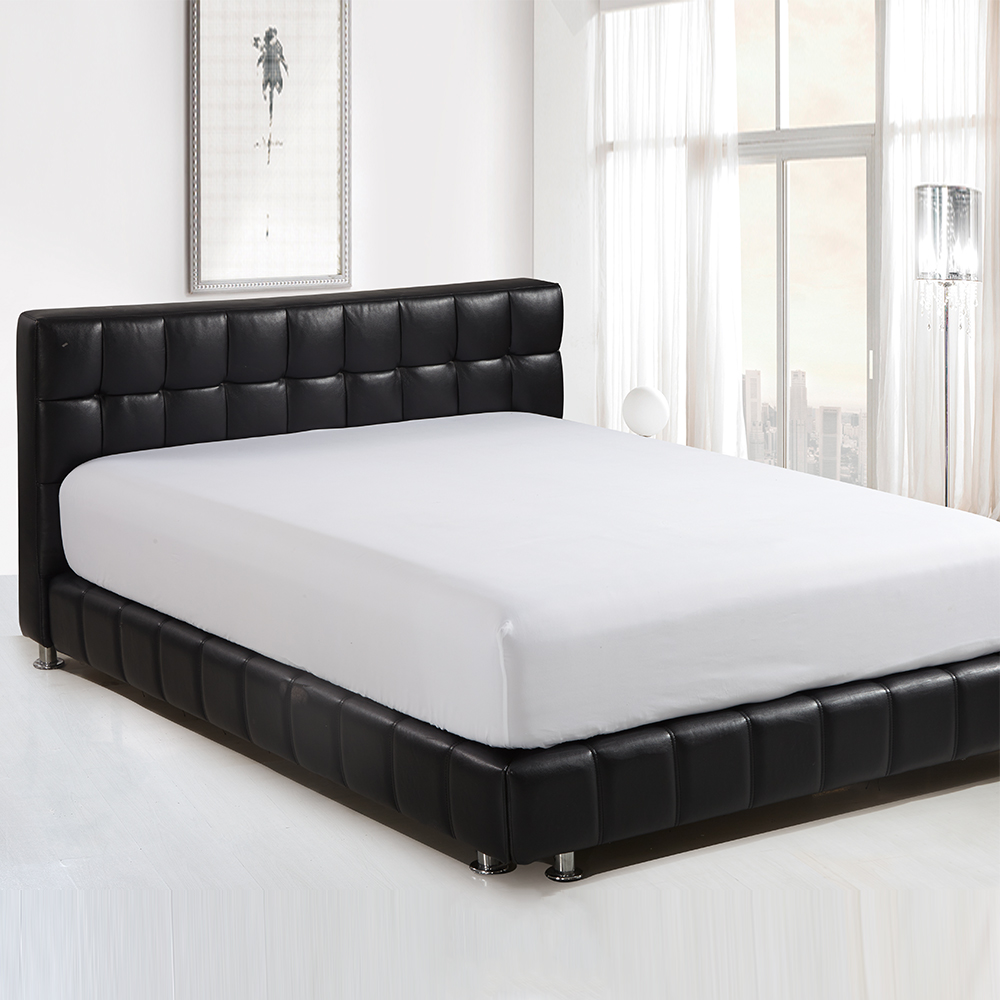
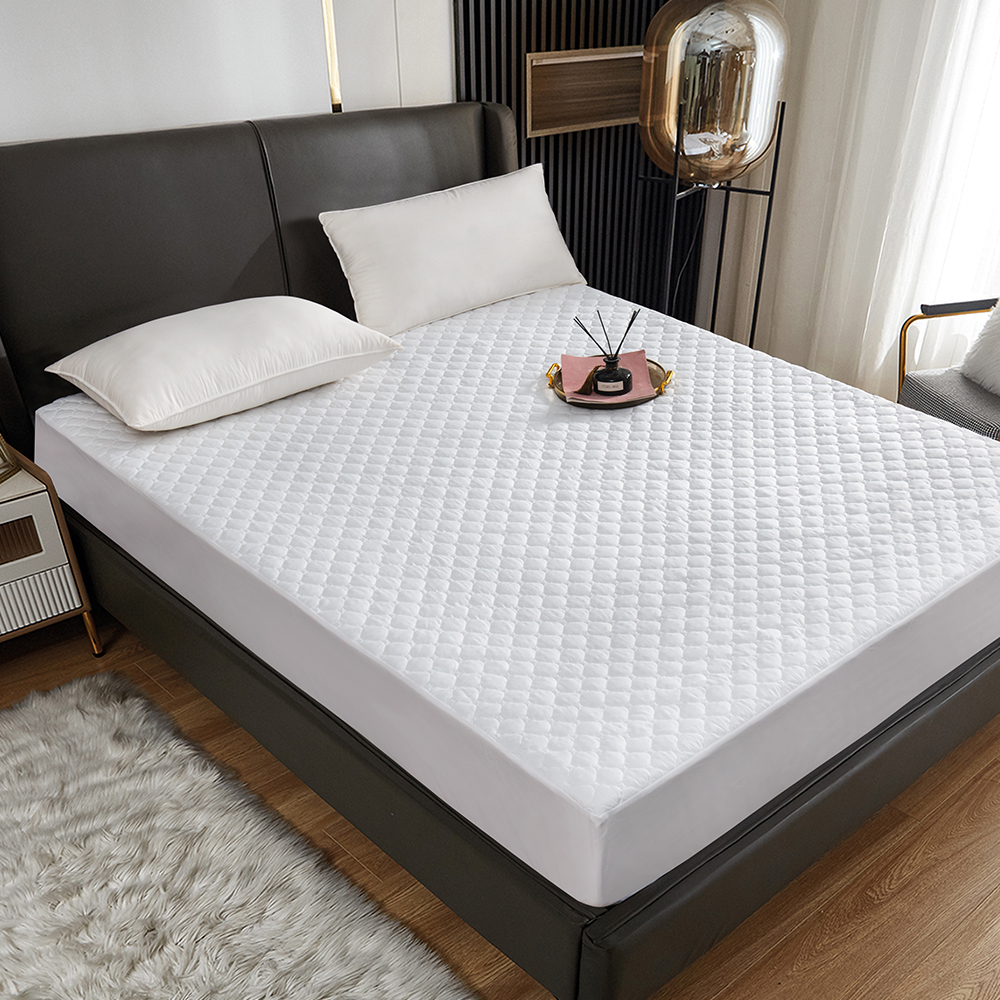 Waterproof Pinsonic Mattress Pad in PolyesterAs a washable mattress barrier, this waterproof pinsonic pad protects the bed from moisture and allergens, addressing common nighttime itch complaints for sensitive sleepers.View Product →
For most sensitive-skin sleepers, the combination of a smooth top sheet, a low-friction pillowcase, and a washable mattress barrier resolves the majority of nighttime itch complaints.
What Wholesale and Bulk Buyers Should Verify
Retail shoppers can feel a sheet in a store or wash it at home before committing. Wholesale buyers do not have that luxury, so the verification process has to happen before the order is placed. If you are sourcing bed sheets for sensitive skin as a distributor, hotelier, or brand owner, these checks are essential:
- Request a specification sheet with fiber content, gsm, weave type, and finishing chemicals.
- Ask for a pre-production sample and wash it before approving bulk production; this exposes shrinkage and colorfastness issues early.
- Confirm the dyeing method and request test reports for formaldehyde, azo dyes, and allergenic dispersive dyes.
- Check whether the supplier can offer natural-fiber options within the same production line. For sensitive-skin programs, a 99.99% cotton solid bed sheet set is often requested as an alternative to standard polyester offerings.
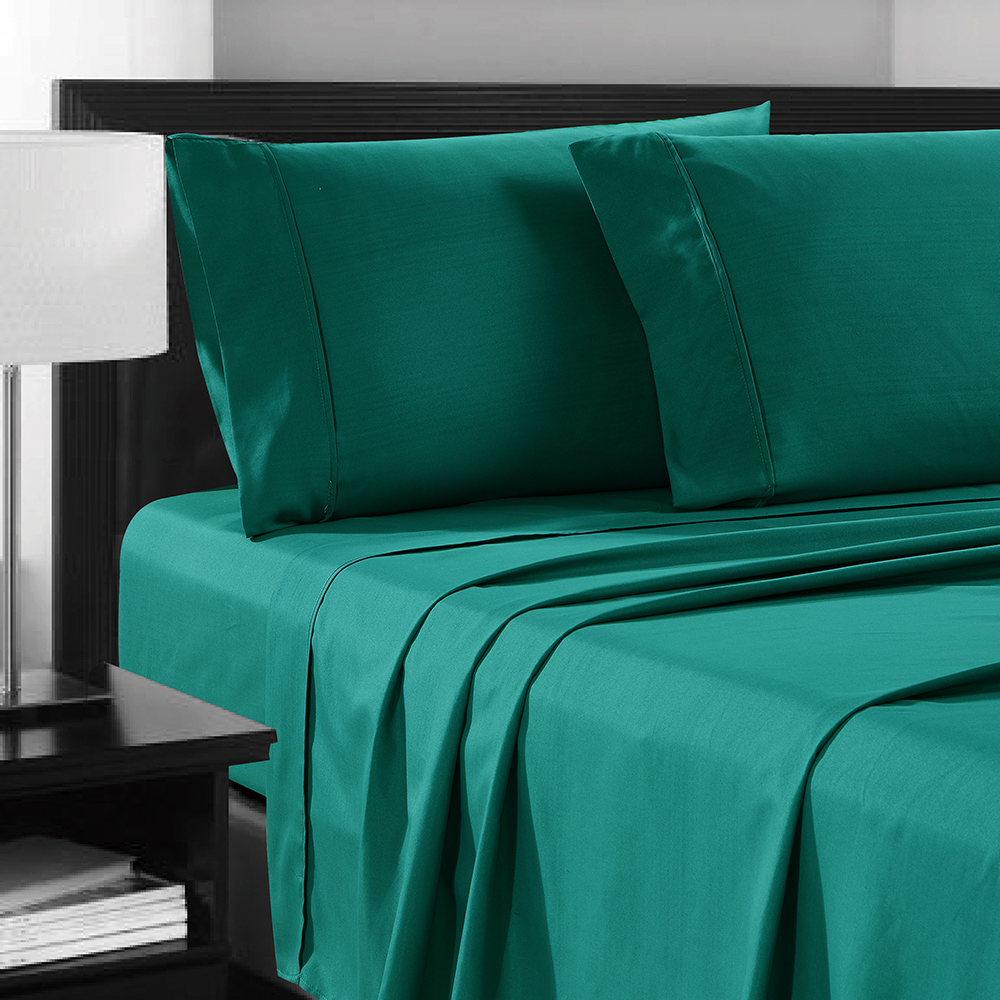 Cotton Solid Bed Sheets 4-Piece SetFor wholesale buyers sourcing sensitive-skin bedding, this cotton sheet set provides a breathable and natural option, though material verification is essential before placing bulk orders.View Product →
For buyers who are still comparing material strategies, our overview of the benefits of using natural fibers in home textiles provides a useful reference when deciding between cotton and polyester programs.
The Bottom Line
Bed sheets for sensitive skin are not a single product category; they are a set of material and construction criteria. Smooth fibers, an appropriate weave, low-irritation dye chemistry, and a barrier against allergens all contribute to a comfortable night's sleep. Cotton remains the safest default for most people, fine polyester offers excellent dust-mite resistance at a lower price point, and satin is the best choice for reducing friction.
Whatever you choose, wash your new bedding before the first use, monitor how your skin responds over the first two weeks, and replace or upgrade individual pieces rather than the entire set when one component is causing trouble. With the right combination, bed sheets become an active part of your skincare routine rather than a hidden source of irritation.
 previous post